While it demonstrated the demand for decentralized commerce, it also exposed vulnerabilities to hacking, scams, and legal crackdowns. Though none of the replacement dark web marketplaces have been as big as Silk Road, AlphaBay gained significant attention. In general, the Silk Road black market gave rise to an extremely profitable underground global trade that continues today. Rather than a broad market place, today’s replacement markets are more likely to specialize in specific goods or a unique transaction system. Unfortunately, the current world of darknet markets isn’t much better — rife with shady characters, scams, and instability.
January 2013: Ross Ulbricht Tries To Order A Hit On An Employee
In 2013, the FBI successfully traced Ulbricht and seized the Silk Road. Ross Ulbricht was arrested and sentenced to life in prison, marking one of the first significant takedowns of a dark web marketplace. Silk Road was the first modern darknet market and was accessible only via the Tor network, which anonymizes users by routing their activity through a global server network, making their activities difficult to trace. Silk Road used Bitcoin for transactions, which allowed users to make payments with greater anonymity than traditional payment methods. Most products available on Silk Road were drugs, such as cocaine, heroin, and prescription medications.
What Does 25 To Life Mean?
Like so many revolutionaries before him, the idealist became an ideologue, willing to kill for his beloved vision. At one point, DPR corrected Inigo that this action was not revenge; it was justice—a new justice, according to the law of the Silk Road. Over a week or so, Force conspired with his team to complete the fake death of Green. Force sent DPR photos of the staged torture, followed by photos of Green, facedown on the floor, pallid, smeared with Campbell’s Chicken & Stars soup—the supposed aftermath of asphyxiation.
- He was arrested in 2013 and convicted in 2015 of multiple charges, including conspiracy to distribute narcotics and money laundering.
- Be extremely cautious of potential financial scams, phishing attempts, or fraudulent schemes.
- The coordinated efforts of agencies from around the world were what ultimately led to the arrest and conviction of Ross Ulbricht, the man behind Silk Road.
- All of those coded bits of information—the time stamps and GPS stamps on photos and messages—can be easily manipulated, even forged.
- By adopting encryption and cryptocurrency, Ulbricht believed that his marketplace could provide anonymity and security for its participants, allowing them to avoid government scrutiny.
Dr Barratt’s research of Silk Road focused on the individuals using the first-of-its-kind deep web platform to buy illicit drugs and the social impacts it generated. Ulbricht, who holds an advanced degree in chemical engineering, at times used computers at internet cafes to access the servers running Silk Road and used the online alias “Dread Pirate Roberts” to conceal his own identity. The site achieved notoriety through media reports and online chatter. But users could only access the site through Tor – a system that lets people use the web without revealing who they are or which country they are in.
When Was Ross Ulbricht Arrested And What Was He Charged With?
Despite the defense’s arguments, a jury found Ulbricht guilty on all counts in February 2015. He was convicted of money laundering, computer hacking, and conspiracy to traffic narcotics, and was sentenced to life in prison without possibility of parole. In two short years, Silk Road grew to more than 100,000 users with sales of nearly $214 million, the largest and most sophisticated online market for illegal drugs in history. On 4 February 2015, Ulbricht was convicted of seven different charges, including charges of engaging in a criminal enterprise organization, computer hacking, money laundering, and narcotics trafficking. In order to access the site, users had to use anonymity software called Tor and pay with Bitcoin, a cryptocurrency whose transactions are all recorded online. Ross Ulbricht, also known as “Dread Pirate Roberts,” operated the anonymous digital marketplace known as Silk Road between 2011 and 2013, when law enforcement shut the site down and arrested him at a California public library.
Government Crackdowns On Dark Web Markets

Silk Road, the infamous dark web marketplace, was the brainchild of Ross Ulbricht, who created the site in 2011 as a platform for buying and selling drugs anonymously. The site quickly became a hub for illegal activity, with everything from drugs and weapons to fake IDs and hacking tools available for purchase. While the site was ultimately shut down by the FBI in 2013 and Ulbricht was sentenced to life in prison, the legacy of Silk Road lives on as a cautionary tale of the dangers of the dark web.
Volatility Due To Scams, Cyberattacks, And Law Enforcement Threats
The impact of Silk Road on the dark web was immense and far-reaching. From the way people conducted business on the dark web to the way law enforcement agencies operated, Silk Road changed the game. In this section, we will discuss the impact of Silk Road on the dark web from different perspectives. Silk Road was infamous for being a black market site that facilitated the sale of drugs, firearms, and other illegal items.
- Ulbricht created it from a libertarian mentality of wanting less government regulation, not more, but for two and a half years it gave many people the closest thing they’ve had to a safe supply.
- I’m here to answer your questions and provide accurate, sourced information about any aspect of the Silk Road story.
- The FBI seized crypto wallets of Silk Road users and arrested Ulbricht, collecting millions of dollars worth of Bitcoin.
- He earned some $80 million in Bitcoin through illicit commissions and generated over $1.2 billion in turnover.
- Force told his boss that Silk Road was a “target of opportunity.” But he was unskilled at computers, and he didn’t know anything about bitcoin.
- Shoppers could find nearly any good or service — legal or illegal — as long as the intended purpose wasn’t to harm or defraud.
Takeaways From Trump’s Second Inaugural Address
The deep web is accessible only by downloading special software called Tor, which anonymizes web traffic. According to the government, “several thousand drug dealers” used Silk Road to sell drugs and other illegal products to over 100,000 anonymous buyers and to launder hundreds of millions of dollars earned from those illegal sales. After the site was shut down, the FBI seized bitcoins earned through illegal transactions that the government later sold for more than $48 million. Silk Road was a marketplace that operated on the dark web, allowing users to buy and sell illegal goods and services anonymously. It quickly gained notoriety for its role in facilitating the sale of drugs, weapons, and other illicit items. However, the site was eventually shut down by law enforcement, and its founder, Ross Ulbricht, was sentenced to life in prison.
Civil Forfeiture Of Silk Road-associated Bitcoins
Over the past few months he had been handling customer service for the massive online enterprise called Silk Road. It was like a clandestine eBay, a digital marketplace for illicit trade, mostly drugs. Green, under the handle Chronicpain, had parlayed his extensive personal narcotics knowledge—he’d been on pain meds for years—into a paying gig working for the site. Silk Road was hidden in the so-called dark web, a part of the Internet that’s invisible to search engines like Google. In that relatively short span, Silk Road managed to rack up (depending on how you count) more than $1 billion in sales. ULBRICHT deliberately operated Silk Road as an online criminal marketplace intended to enable its users to buy and sell drugs and other illegal goods and services anonymously and outside the reach of law enforcement.
It was Silicon Valley in extremis, a disruptive technology wrapped in political rhetoric. DPR was its philosopher-king, envisioning a post-state digital economy, with Silk Road as the first step toward a libertarian paradise. Not only was Silk Road a slap in the face to law enforcement, it was a direct challenge, as DPR wrote, to the very structure of power.
Is There A New Silk Road Marketplace?
“I had left my promising career as a scientist to be an investment adviser and entrepreneur and came up empty-handed.” Ross felt ashamed, but not long afterward Palmertree got a job in Dallas, leaving Good Wagon to Ross. Ulbricht, for his part, took to social media to celebrate Trump’s election victory and remind him of his promise. One week after the election, he wrote on X that he “can finally see the light of freedom at the end of the tunnel.” They argue his life sentence is an example of government overreach. In conclusion, as we continue to explore the depths and intricacies of the internet, the legacy of the Silk Road remains an important reminder of the potential dangers that lurk beneath the surface.
The beauty and craftsmanship of porcelain is still admired and collected around the world, and the legacy of the Silk Road porcelain trade is a reminder of the importance of cultural exchange and cooperation. Overall, the silk Road and the Han dynasty played a significant role in the development and expansion of civilizations along the ancient Silk Road. And cybersecurity problems at Silk Road weren’t limited just to Ulbricht’s poor operational security.
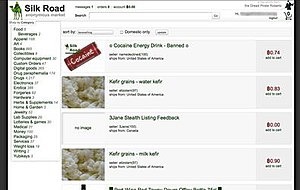
The seizure of Bitcoin and arrest of Ulbricht were meant to send a clear message to other cybercriminal enterprises. Drugs were the most common and lucrative goods to buy on Silk Road — making up 70% of the products for sale. Other items for sale included banned energy drinks, hacking services, digital goods (such as malware and pirated software), and forgeries (such as fake licenses and other illicit documents). Legal goods and services like art, books, jewelry were also for sale. Marshals Service, Office of Foreign Assets Control, and NY Department of Taxation. Mr. Bharara also thanked the ICE-HSI Chicago-O’Hare office for its assistance and support, as well as the Department of Justice’s Computer Crime and Intellectual Property Section and Office of International Affairs.