
What is apparently so novel about the “intellectual dark web” is not just its savvy use of Patreon or YouTube, but its claim to be eclectic and transpartisan. It has become typical for the members of this club when they appear in public — on Harris’s or Joe Rogan’s podcasts, for example, or on Peterson’s and Dave Rubin’s YouTube channels — to stress emphatically both their ideological divides and their respect for the intellectual virtues that they believe allow them to overcome them. The main attraction of Harris and Shapiro’s conversation was not their philosophical sparring, but their show of solidarity against the left-wingers that had attacked them both. In the face of the politically correct left, and to a lesser extent the neo-fascist alt-right, these thinkers aim to present themselves as defenders of “reason,” “truth,” and “facts.” This attachment to rational principles — not to parties or tribes — leads them at times to characterize themselves as a new political center. Some early critics, such as Henry Farrell at Vox, argued that the stars of the IDW were “white intellectuals” resentful of being displaced from a dominant cultural position and having to endure pushback against their ideas, including sexist and racist ones.
A Messiah-cum-Surrogate-Dad For Gormless Dimwits: On Jordan B Peterson’s “12 Rules For Life”
Intellectual ties to the right can win you toleration if you are David Frum, Ross Douthat, or David Brooks. You may be recognized as a member of a minority that needs to be acknowledged, and as a possibly unreliable ally against Donald Trump Republicanism. But writers who suggest that black people are relatively more likely to be stupid are likely to have a much rougher time of it than in the 1990s or the aughts. The same is true for men who call for women who have had abortions to be hanged by the neck until dead. I’m skeptical that the left knows what to do, I’m very skeptical of what the left advances in terms of policy proposals, but in terms of my values, they haven’t changed at all. The interesting thing, though, is having been effectively evicted from the left, we ran into all sorts of other people who we thought might be a bit right of center, who it turned out were actually also left of center and had also been similarly evicted and then misportrayed.
College Athletes Sue NCAA Over Redshirt Rule, Claim Antitrust Foul
The latter was influenced by the ideas of French philosopher Michel Foucault, who was concerned with dissecting power. Jamie Q Roberts is a lecturer in the Department of Government and International Relations at the University of Sydney. He specialises in international relations with a focus on international security and popular culture.
Since the discovery of Chinese troll farms churning out social media posts, it’s easy enough to imagine the jargon and rhetoric of the king troll of the intellectual dark web being weaponized, too. Liu has mostly stuck to his native tongue, despite taking to American social media platforms, suggesting that his Randian goals might be lost in translation. His engagement with Twitter is mostly limited to retweets of ethnic identity activists (the above tweet to the Concordia Association of Manchuria reads, basically, “Basuria congratulates the people of Manchukuo in strengthening their fight to recover their nation”). If we look at things from a historical point of view, Xinjiang, since ancient times, has had a closer relationship with Central Asia and Southwest Asia than East Asia. If we go back to the earliest periods of Chinese history, the Zhou and Han Dynasties, for example — the ethnic composition was different. What is now Gansu and the Hexi-Gansu Corridor used to be populated by people related to Persians.
What Is The ‘SCP-067′ Meme? The ’67 Kid’ Horror Trend Of Uncanny ‘Anti-Piracy Screens’ Explained
Weinstein speaks and publishes on a variety of topics including, gauge theory, immigration, the market for elite labor, management of financial risk and the incentivizing of risk taking in science. And he, along with brother Bret—whom I just did a podcast with in Seattle—has become an unusually powerful advocate for free speech. Jacob Hamburger is a graduate student at the Ecole Normale Supérieure in Paris, whose work has focused on Cold War liberalism and neoconservatism in France and the United States. His journalistic writings have appeared in numerous publications in both English and French; and he has translated the authors Michel Foucault and Marcel Gauchet.
Similar Content Being Viewed By Others
For instance, the comments on Savodnik’s recent piece, about the one-year anniversary of the arrest of American reporter Evan Gershkovich in Russia, are depressingly full of whataboutism about January 6th defendants. This event brought light on what was considered acceptable, even prizewinning discourse within the academy (“Human Reactions to Rape Culture and Queer Performativity at Urban Dog Parks in Portland, Oregon”). This was in sharp contrast to the ideological exclusions of the academy, such as critics of ‘gender identity’. Roberts suggests that this is the truth about the IDW that the Woke left wants to suppress most of all. “Perhaps there is nothing more dangerous for the Woke left than the criticisms made by other Progressives—rather than taking these criticisms seriously, these other Progressives must be nullified by being branded ‘Alt-Right’ or ‘Conservative’,” he writes. Roberts says that he wanted to skip the usual dry academic prose, and he does violate one of the biggest canards of professional historians by writing in the first person at times.
The 1980s–1990s political correctness debates were in many respects debates over the legacy of the radical politics and counterculture of the 1960s. Allan Bloom kicked things off with his 1987 best seller The Closing of the American Mind, which argued that the influence of ’60s-era student, feminist, and Black Power movements led college students to reject traditional liberal arts curricula. Roger Kimball later upped the ante, alleging that the professors of the 1980s were former student protesters. Frustrated by the failure of their movements to destabilize American society, Kimball claimed, they channeled their discontent into “politically motivated” fields like queer theory or African-American studies, said to be inspired by “postmodern” Continental thinkers like Michel Foucault and Jacques Derrida. The IDW figures were hardly the only public intellectuals critical of the rise of illiberal progressivism in academia, social media, and mainstream journalism. Numerous liberals who were not a part of the IDW coterie, such as New York magazine’s Jonathan Chait, the Atlantic’s Anne Applebaum, and Canadian critic Phoebe Maltz Bovy were concerned about the phenomenon at the time.
They assert, assess, and ascribe to reason and reflection, at least until that reason or reflection is challenged, or until they become complicit in the knowledge-power nexus they have agreed to expose. Such is the case of the privileged contrarians, the exiled academics who have sloppily formed the vestiges of an “Intellectual Dark Web;” a neoliberal enclave of “public intellectuals” determined to reduce the progress of pedagogy to the sterile hierarchy of pedanticism. In China, this intellectual dark web, or zhīshifènzǐ ànwǎng 知识分子暗网, has been embraced by internet users — but there are plenty of homegrown figures whose popularity rivals that of Jordan Peterson or Sam Harris. Like their comrades on 4chan, Chinese internet users go looking for stronger stuff, too, and it often leads them to an intellectual and blogger by the name of Liú Zhòngjìng 刘仲敬, who made a name for himself in the early-2000s on social media platforms like Douban 豆瓣 and Zhihu 知乎 (China’s version of Quora). Like Sargon of Akkad or Black Pigeon Speaks, Liu lays a scholarly, scientific veil over ideas far more extreme than anything found in the mainstream. Of the IDW stars profiled in Weiss’s article, several—former Evergreen State College biology professors Bret Weinstein and Heather Heying, a married couple; Canadian psychologist and bestselling guru Jordan Peterson; podcaster Joe Rogan—have devolved into full-blown cranks.
Alternative Sense-making Collective
Bret Weinstein has since weighed in, lamenting that Murray and Kisin have become what they once opposed. On March 1st, Redditor leocohen99 submitted a parody alignment chart with the caption “Intellectual Dark Web” to the /r/Jordan_Peterson_Memes4 subreddit (shown below). On March 16th, the Los Angeles Times6 published an op-ed article about the Intellectual Dark Web titled “A new movement to speak truth to identity politics is our best hope against regressive thinking.” On May 3rd, the libertarian news site Reason2 published an article titled “What Is the ‘Intellectual Dark Web?’.” THE FIRST DISTINCT intellectual movement to have emerged during the Trump presidency is not the alt-right, which rose to prominence during the 2016 campaign. Nor is it democratic socialism, the egalitarian platform that many young progressives have embraced since the Occupy Wall Street movement.
Crimes Of The Times: Introducing Pandora’s Box: The Fall Of LA’s Sheriff
- Some of the people mentioned in it, such as Sam Harris, have already distanced themselves from IDW to maintain their intellectual independence.
- Bott made substantial contributions to topology, differential geometry, and mathematical physics.
- After a failed trial run in 1976 Republican against then-president Gerald Ford, Reagan won the party nomination and the presidency in 1980 and again in 1984.
- But where dark web intellectuals veer from analysis of that phenomenon into self-pity is in their consistent tendency to treat all skeptical criticism of their purported commitment to truth-seeking as further symptoms of political correctness gone mad.
Defectors from academia are generously represented here, but the concerns of the intellectual dark web go far beyond performative wokeness on college campuses or Twitter pile-ons in the name of social justice. The essence of the movement, as I see it, is having the courage to stand up to groupthink, even if it means losing friends or having your positions willfully misconstrued because they don’t fit neatly in a particular ideological box. It’s not about liberals beating up on liberals but, rather, understanding that the same tribalism and regressive thinking that is damaging the Republican Party, perhaps beyond repair, is also wreaking havoc on Democrats and their allies. For the record, I first had such questions several years ago when I interviewed the couple, around the time Weiss’s IDW piece came out, for an article I ended up shelving. Weinstein and Heying told me of a colleague and her students being ejected from a no-whites-allowed campus event on that day; the faculty member herself recollected that she and the students made a voluntary exit after realizing that the event was meant as people-of-color-only, despite being told they were welcome to stay.
“There is no point to any success that is founded on lies. I mean, sure, you might get some money, but everything else is hollow. And in the end, we are all alone with ourselves.” And what account of dignity is dependent on minorities in society giving way, somehow, to some expectation? All of this seems to me to be kept in the dark—crucial, basic definitions deliberately omitted, which is not just anti-philosophical but anti-intellectual. In this instance, McWhorter is referencing actual critical race theory, not the catch-all buzzword pushed by Rufo et al.
- That day, critics of the figures profiled in the op-ed posted tweets mocking and deriding the article (shown below).
- It would not be surprising to see many of the people discussed in Weiss’s piece defect to the forces of darkness over the next couple of years.
- While some connections are straightforward, like the use of positive words indicating happiness, such as “happy,” “excited,” and “elated,” many relationships between verbal expression and psychology are less apparent.
- It would only be a formality, however, since like Murray, Harris seems to be an extreme enthusiast for Gazan casualties.
- A common refrain on the dark web is to debunk various left-of-center critiques by arguing that what appears to be systemic inequality is actually the result of individual choices or behavior.
What Is The Intellectual Dark Web?
Some of them, Weiss wrote, were “purged from institutions that have become increasingly hostile to unorthodox thought,” and they came to define themselves by, and even take pride in, their exile, finding a new community there. Eric Weinstein is credited with coining the term following his brother’s involvement in a series of protests at Evergreen State College for objecting to white students and faculty being urged to leave campus during a “Day of Absence” demonstration. The term is used to describe a group of public figures with varying political beliefs who support freedom of speech and often voice criticisms of political correctness, third-wave feminism and identity politics.
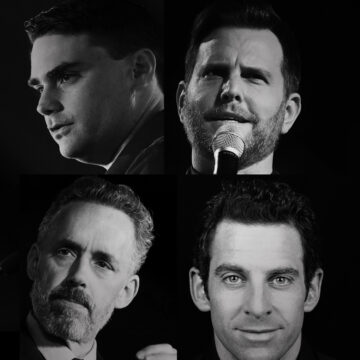
The intellectual dark web (IDW) is a loose affiliation of academics and social commentators who oppose what they perceive as the influence of left-wing identity politics and political correctness in higher education and mass media. The term “intellectual dark web” was coined, almost tongue-in-cheek, in early 2018 by Eric Weinstein, a mathematician, manager at Thiel Capital, and op-ed writer, and was meant to recognize a network of “renegades” in academia and media who reject identity politics in the name of unhindered dialectic (“free speech”). The group includes the likes of Islamophobic blogger and neuroscientist Sam Harris, former Breitbart editor Ben Shapiro, failed libertarian comedian Dave Rubin, and Jungian clean-your-room guy Jordan Peterson. On social media and chat forums, IDW often means “Intellectual Dark Web.” It refers to a loose grouping of intellectuals, writers, and commentators who engage with controversial ideas often sidelined by mainstream academic and media institutions. Coined by Eric Weinstein, the term captures the network’s self-perceived role as dissenters who challenge conventional discourse. Key figures often mentioned in this context include Jordan Peterson, Sam Harris, Ben Shapiro, and Joe Rogan.