The use of the dark web usually means that you are attempting to engage in activity that you could not otherwise carry out in the public eye. Bear in mind too, that your internet provider will be able to see you connecting to Tor nodes, even if it doesn’t know exactly what you’re doing. Many people install a VPN as well, but then you’re putting your trust in an additional third party to not track your activities or report them to anyone else. Determining which of the two—deep web or dark web—is “more dangerous” depends largely on the context of a user’s actions and intentions. That said, it is important to remember that there are hundreds of competing VPNs, and they are not all created equally. Many VPNs are sluggish, so they will not be suitable for data-intensive tasks.
How Do I Access The Dark Web?
Some markets are relatively short-lived (thanks to law enforcement), but others are notorious enough that they survive, for instance, Silk Road, AlphaBay, and Hansa. Hence, you never know when a popular .onion site is going to vanish, or even die. Though it’s still helpful, a static list isn’t enough (we try to keep our own, the one above, up-to-date, though). The best thing is to actually understand how to find the fresh, new links. It has a feature called CoinJoin that combines multiple coins from different users into a single transaction.
Deep Web Vs Dark Web Vs Surface Web
This means there is no easy, direct way for the general public to search this vast amount of unindexed content. In some cases, websites use various methods to block spiders and prevent indexing. These methods include using CAPTCHAs, multiple IP addresses for the same content, non-HTML content or data that spiders cannot pick up, password protection, and unlinked content. Content that resides on the surface web is accessible because software robots called “spiders” or “crawlers” capture and index it, and search engines assign it rankings. These systems typically scan websites that contain .com, .org., .net, or a similar domain as well as some data and posts at social media sites. As these spiders capture Web pages, they follow embedded links to uncover additional content.
- While deep web content is reachable through a standard browser, the dark web requires specialized software tools.
- I2P, or the Invisible Internet Project, allows you to access the ordinary and dark web.
- See how our intelligent, autonomous cybersecurity platform harnesses the power of data and AI to protect your organization now and into the future.
- The famous social media platform has a prominent presence on the dark web.
- And we pore over customer reviews to find out what matters to real people who already own and use the products and services we’re assessing.
- Some of these are well-known, established threats that circulate in this nook of the web.
It’s Illegal To Access The Dark Web: False

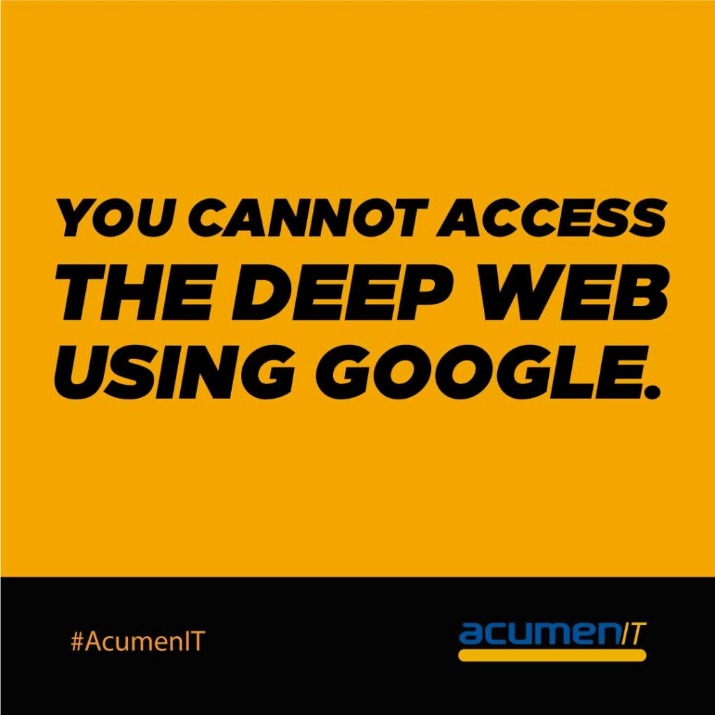
In fact, only about 4% of the web is indexed, meaning it shows up in standard search engines. You can’t use Google to access the Deep Web—you’ll need to go directly to websites and archives to find non-indexed files, or try a Deep Web search engine. Unlike the Dark Web, which requires a special web browser called Tor, you can use any browser to get to the Deep Web. Law enforcement agencies keep an ear to the ground on the dark web looking for stolen data from recent security breaches that might lead to a trail to the perpetrators. Many mainstream media organizations monitor whistleblower sites looking for news.
Install Premium Antivirus Software On Your Phone
However, it’s up to us to take control of our personal privacy in a world of bulk data collection, surveillance, and personalized ad tracking. To access a dark web resource, you will need to know its web address to the letter. These websites will also use .onion top-level domain names, and many of them will be very long, random combinations of letters and numbers. You won’t be able to access .onion addresses using a standard search engine as they aren’t indexed by crawlers. However, if you’re planning to use it for illegal activities, there are significant risks involved. For example, one of the most common ways to access both the deep web and the dark web is through Tor.
What Are Uses Of The Surface, Deep And Dark Web?
SecureDrop is a site that protects the privacy of journalists and whistleblowers. It aims to advance research on terminal illnesses like cancer with access to unbiased scientific publications. For example, randomly clicking a link can land you in extreme content, such as child pornography, which is a serious criminal offense to access. Threat actors also exploit vulnerabilities in your systems and software to gain access to them.
Related Content
In 2008, the first Tor Browser was released, making it easier for any internet users to access the dark web. The dark web is infamous for containing sites such as Silk Road and other marketplaces where users could potentially buy drugs and/or weapons, stolen credit cards, IDs, and much more. That means that only 0.024% of all the known pages are findable in Google’s search engine. The users only have access to a fraction of the available data and web pages.
Companies use dark web monitoring to scan for leaked data, stolen credentials and breach indicators, helping them track and identify perpetrators. But let’s be realistic, the best defence isn’t just playing detective after the fact. It’s making sure your sensitive information never lands there in the first place. It quickly outgrew its military roots, emerging as the Tor browser, a free gateway to the dark web’s digital back alleys.
In many cases, people fall victim to fake marketplaces, where they pay for products (such as illegal substances or hacking tools) but never receive what they paid for. Without any recourse for recovery, users can find themselves financially and legally compromised. Facebook’s official dark web version helps users access the platform in countries where it’s blocked. During testing, I confirmed it provides the same functionality as the regular site while adding Tor’s privacy benefits. The interface works smoothly, but it usually loads slower due to Tor routing.
A network browser gives you access to sites with the ‘.onion’ registry operator. With the onion browser, you can access ordinary HTTPS websites on the web. This is a great way to improve your privacy because Tor isolates each website you visit, meaning third-party trackers and ISPs can’t reveal your identity.
Note that most dark web transactions are carried out using Bitcoin or other cryptocurrencies. You don’t need special tools or a special browser like you need to access the dark web (more about that later). Anyone can access the deep web by using specialized search engines, dedicated web directories, and other sources that can help you find the data or information. The dark web — aka, the deep web — is the second layer of the internet, which is not indexed by search engines. Websites and pages in the deep web might include password-protected content, private forums, and personalized resources. The deep web comprises non-indexed sites that are not accessible via standard search engines.
Cyber threat intelligence (CTI) helps organizations predict, understand, and defend against cyber threats, enabling proactive protection and reducing the impact of attacks. This information about the implication of accessing not only the deep web but also the dark web empowers the person to make responsible decisions and fathom the complexity of internet interaction. In the end, this is advantageous because one does not risk increasing personal safety or ethical integrity in this increasingly digital world. To understand the differences in the dark vs deep web, one comes to realize that there are legitimate uses and significant risks in both layers. Darren Guccione is the CEO and co-founder of Keeper Security, the world’s most popular password manager and secure digital vault. Keeper is the first and only password management application to be preloaded with mobile operators and device manufacturers including, AT&T, Orange, America Movil and HTC.
The deep web is a layer of the internet that’s not indexed by search engines and requires further permissions to access, like a paywalled academic resource or an employee-only corporate website. The dark web is another layer of the internet where users are anonymous and illegal activities, such as drugs or weapons trading, may occur. In addition, know that while accessing the dark web is legal in most countries, engaging in illegal activities (buying or selling contraband, hacking services, etc.), is illegal everywhere. You should be aware that law enforcement agencies may be monitoring the dark web and that visiting certain websites or engaging in illegal activities can result in criminal charges. You can also check out this ultimate dark web safety guide to browse safely.
Law enforcement agencies don’t pay much attention to the Gray Web, so users don’t feel the need to be anonymous. Deep Web sites include private databases, restricted content, and other sources of in-depth information about companies and their operations. This makes these sites valuable sources of information if the content is accessible. However, the access restrictions on the Deep Web can make this information more complex and difficult to access. This deep internet search engine has two billion indexed items from libraries around the world, including many links that are only typically available with a database search.