This opens the door to applying for loans, creating fake IDs, or taking out credit cards in your name. It can take months—or even years—to recover from this kind of identity fraud. The dark web is a hidden layer of the internet that isn’t indexed by regular search engines and can only be accessed using special software like Tor. While it has legitimate uses, many illegal activities also take place there. One of the most common items sold on the dark web is stolen financial information, including credit card numbers. Recent studies reveal that 63% of U.S. credit card holders have been victims of fraud, and over 50% experienced it more than once.
Q: Are All Stolen Credit Card Numbers Sold On The Dark Web?
In today’s digitally connected world, the risk of credit card theft has evolved far beyond physical theft. Criminals leverage various tactics, both old and new, to access sensitive financial information. Understanding these methods can help you protect yourself and your financial data. Regularly review your credit card statements and bank transactions for any unauthorized activity. Many banks offer transaction alerts via SMS or email, which can help you monitor your accounts in real time.
Stolen Credit Cards Hit Dark Web For Free
- These tools scan transactions in real-time, flagging any suspicious charges instantly.
- The majority of the numbers are from the United States, and just a little over half of the collection is issued by American Express.
- These details are primarily sought for physical use, enabling activities such as cash withdrawals from ATMs.
- Prices can vary based on demand, how complete the data is and how easily it can be monetized by criminals.
- If your card is linked to auto-pay services or has a high spending limit, the damage can escalate quickly—often before your bank even flags it as suspicious.
The leaked data from the BriansClub hack showed that stolen cards from U.S. residents made criminals about $13 to $17 each, while those outside the U.S. sold for up to $35.70, Krebs reported. When hundreds or thousands are bought at once, that becomes a lucrative crime. As B1ack’s Stash prepares to release its trove of stolen credit cards, law enforcement agencies and cybersecurity firms are working around the clock to trace the origins of these breaches and prevent further exploitation. The cybersecurity community is on high alert as B1ack’s Stash, a known marketplace on the dark web, has announced a massive leak of 4 million stolen credit card details. It is understood that the data included such highly sensitive information as the primary account number of the credit cards concerned, along with expiration dates and the card verification value, CVV2, security code. But that’s not all; there are also cardholder details such as their full name, address, date of birth and telephone number as well as email address.

How A PayPal Account Or Credit Card Ends Up On The Dark Web
- Use multifactor authentication to prevent threat actors from guessing at weak passwords, or getting into your systems with a brute force attack.
- Credit card prices also vary depending on the brand, with American Express being worth the most at 5.13 cents per dollar.
- If a gift card order is not accepted, repeat the warming-up (the previous step) after 5-10 minutes.
- The vast majority (98% of the records) came from Indian banks, Group-IB said in its threat report.
- Canceling your PayPal account or credit card is a crucial step in preventing further unauthorized transactions.
- This latest pack is the fourth credit card dump the carding market has released for free since October 2022, with the previous leaks counting 1.22 million, 2 million, and 230,000 cards.
This enables systems to detect fraud based on minute changes in transaction velocity, merchant category patterns, and even the time of day purchases are made. Pattern recognition through machine learning has revolutionized how we spot compromised cards. Financial institutions tighten their security measures to prevent fraud but that also prevents legitimate transactions as a result. I’ve worked with family-owned businesses that nearly went under after getting hit with a wave of fraudulent purchases. When fraudulent transactions occur, merchants frequently end up eating the costs through chargebacks.
By observing how threat actors advertise and price different types of card data, we can identify which security measures they’re successfully bypassing and which ones are still effective. There is some uncertainty about how many of the cards are actually still active and available for cybercriminals to use. Cyble researchers noted that threat actors claimed that 27 percent, according to a random sampling of 98 cards, are still active and can be used for illegal purchasing. Fraudsters can use the stolen information for unauthorized transactions, identity theft, or resell the data on other platforms. The scale of this leak underscores the persistent vulnerabilities in global payment systems.
Protecting Yourself From Dark Web Credit Card Fraud
MITM is a type of cyber attack where a cybercriminal intercepts the data being sent between two people. A MITM attack most commonly occurs on public WiFi networks because they’re left unsecured and anyone can connect to them. The leaked database includes details of 1,221,551 credit and debit cards, according to Cyble Research & Intelligence Labs researchers who discovered it. Unfortunately, as NordVPN notes, short of abstaining from card use, “there is little users can do to protect themselves from this threat,” the company said in the release. NordVPN found three times more of its cards targeting affluent customers were hacked compared with prepaid offerings designed for people of more modest means. If a gift card order is not accepted, repeat the warming-up (the previous step) after 5-10 minutes.
Subscribe To The Cybersecurity Insider Newsletter
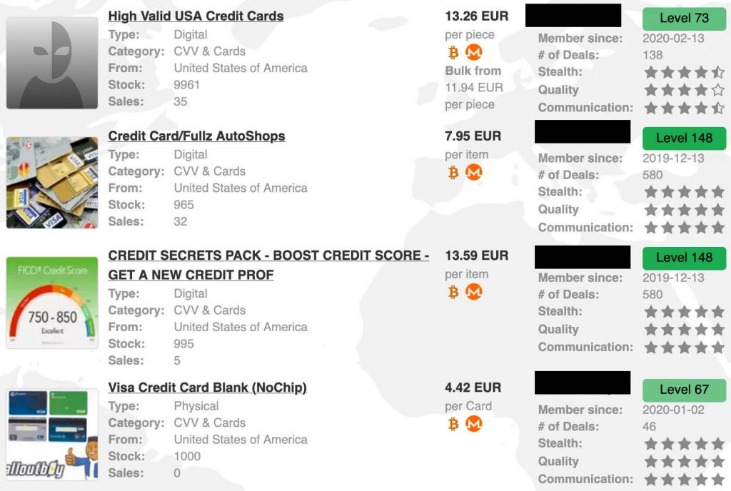
Kaspersky advised that you should act promptly if you suspect your bank card details are leaked and monitor bank notifications, reissue the card and change your bank app or website password. Legitimate users of the dark web include activists, or people who live under oppressive regimes, but they only account for a small percentage of the dark web. The sale of payment card information is big business; in 2022, the average price of stolen credit card data averaged between $17 and $120, depending upon the account’s balance. Dark web monitoring platforms, such as Lunar, provide an automated solution to safeguard personal identifiable information (PII) and credit card details. These platforms continuously scour the deep and dark web, looking for any traces of your sensitive information.
Kaspersky: 98% Of Cybersecurity Experts Seek Improvements To Maximize Protection
One compromised payment processor or e-commerce platform can yield thousands of card numbers at once. Sellers often provide buyers with validity rates for their data and even offer replacements for cards that don’t work. Credit card fraud on the dark web operates quite differently from what many people imagine. By clicking “Continue” I agree to receive newsletters and promotions from Money and its partners. I agree to Money’s Terms of Use and Privacy Notice and consent to the processing of my personal information.
Top Cybersecurity Tools For Small And Medium Businesses (SMBs)
In early August 2021, a threat actor known as AW_cards published a data leak containing details of approximately one million stolen credit cards on several Dark Web hacking forums. The leak was shared free of charge as a promotion to the threat actor’s new carding marketplace, named AllWorld Cards. Stay informed about the latest trends and tactics used by criminals to better safeguard your financial well-being. Buyers of stolen credit card numbers can use them for a variety of illegal activities, such as fraudulent purchases, identity theft, and account takeover fraud.
Only accessible by a specific browser, the dark web keeps traffic anonymous. Making payments online is faster, safer, and easier with Privacy Virtual Cards because of the straightforward interface and multi-platform accessibility. Depending on the virtual card provider, you can customize details like spending limits and even pause/close the card at your convenience. According to Security.org’s 2021 Credit Card Fraud Report, users with enabled alerts were more successful in preventing money loss than those without.
It’s easy to lose track of transactions on your credit or debit card, especially if you use multiple cards. You may not notice your credit card has been compromised until it gets declined or you start receiving monthly bills for transactions you never authorized. Scammers start by prompting users to download malware, which is often disguised as a harmless email attachment.
A phishing message pretends to be from an organization you trust like your bank or the IRS. But if you share information by clicking on the link or responding to the email/text, the data goes directly to a hacker. This screen time includes everything from streaming video, scrolling social media, and browsing the web.